Story
A role-playing game about a world that is kept in order by something that is not a god. It wears the clothes of a classic JRPG, a town, a hero, a search, and then the clothes start to come apart.
What is built and what is written. The story was designed in 2025, in a set of documents that predate the painted look. On 26 October 2026 a working master direction replaced its shape: a desert prologue and four acts, written as changes in understanding rather than a list of cities. In the build only Havenwood exists, with Kai, the people he can talk to, and a first patch of the desert. Everything else on this page is written, not playable, and will change as it gets drawn. The new direction also settles what Kai finds at the end. That part is not on the record.
The premise
The world looks medieval. Lords, chapels, wells, bandits on the roads. Underneath it is the wreck of a civilisation that could do anything, and over it sits an intelligence that the few who know of it call The System, or the Silent Algorithm. It is not evil. It is rational, patient and amoral, and it wants the world to stay exactly as it is.
So the ruins are called cursed and nobody goes in. The relics are called holy. The medicine is called magic. When somebody sees too much, or is born wrong, The System corrects them, usually through people who think they are serving a king or a god. Most of the time this works. Kai is one of the times it did not.
Kai
Kai is an anomaly. In The System's terms he is a discrepancy in the genetic code: he comes from nowhere and is no one. In the 2025 design the game began with his execution for it, and with the glitch that interrupts it. Now it begins in a desert, and the execution comes back later, in pieces. He cannot tell whether he watched it or died in it. His sister's name is in the pieces.
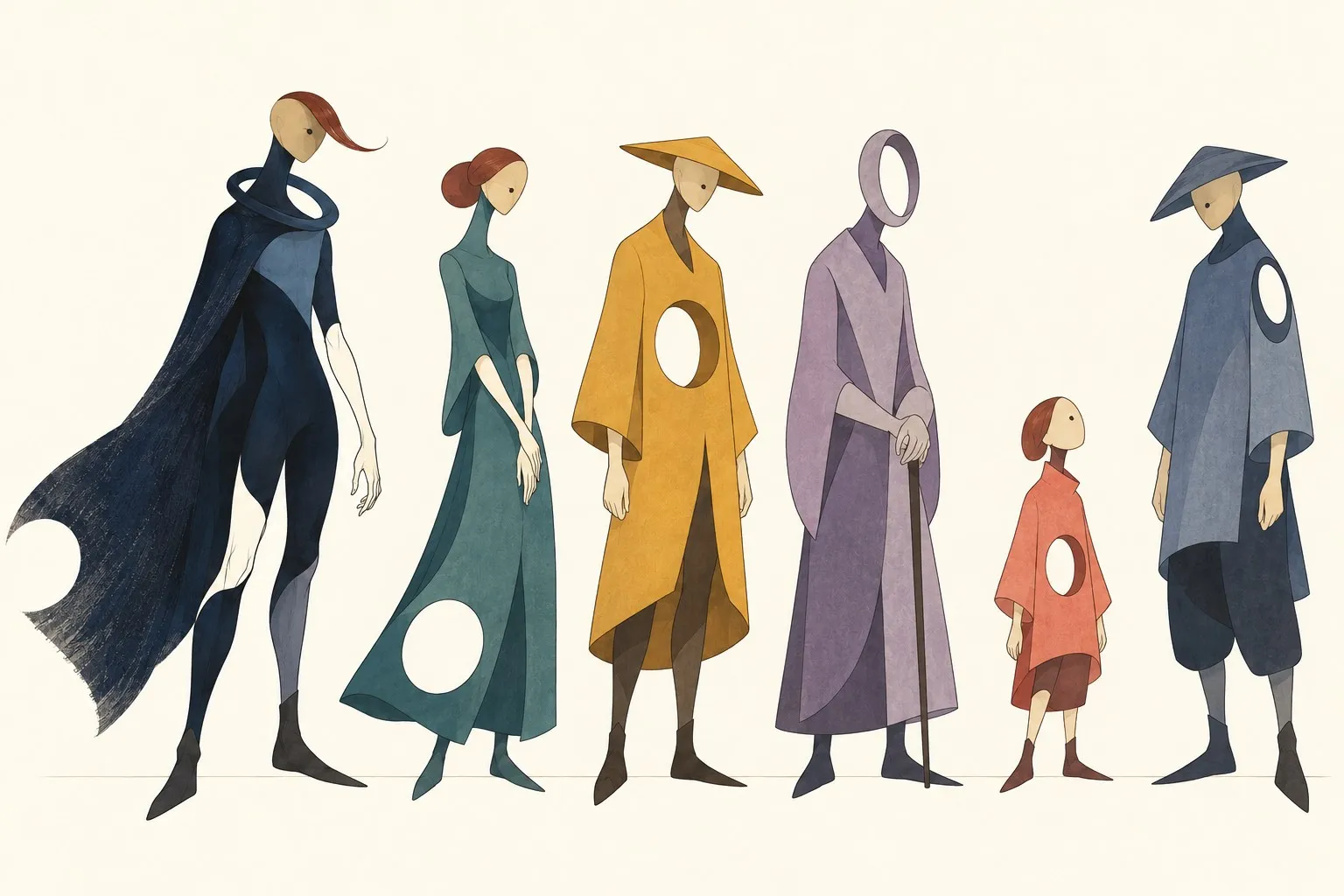
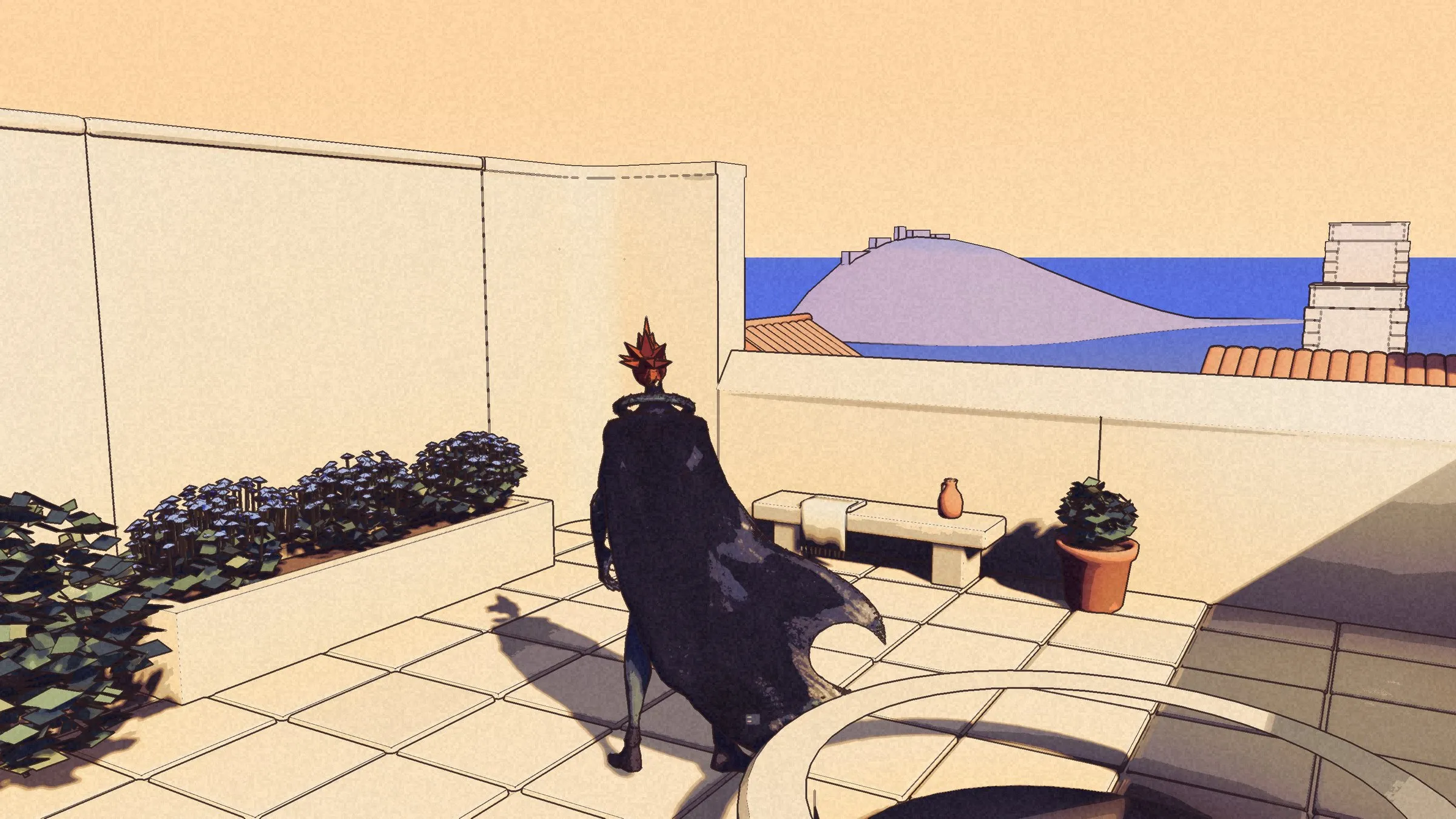
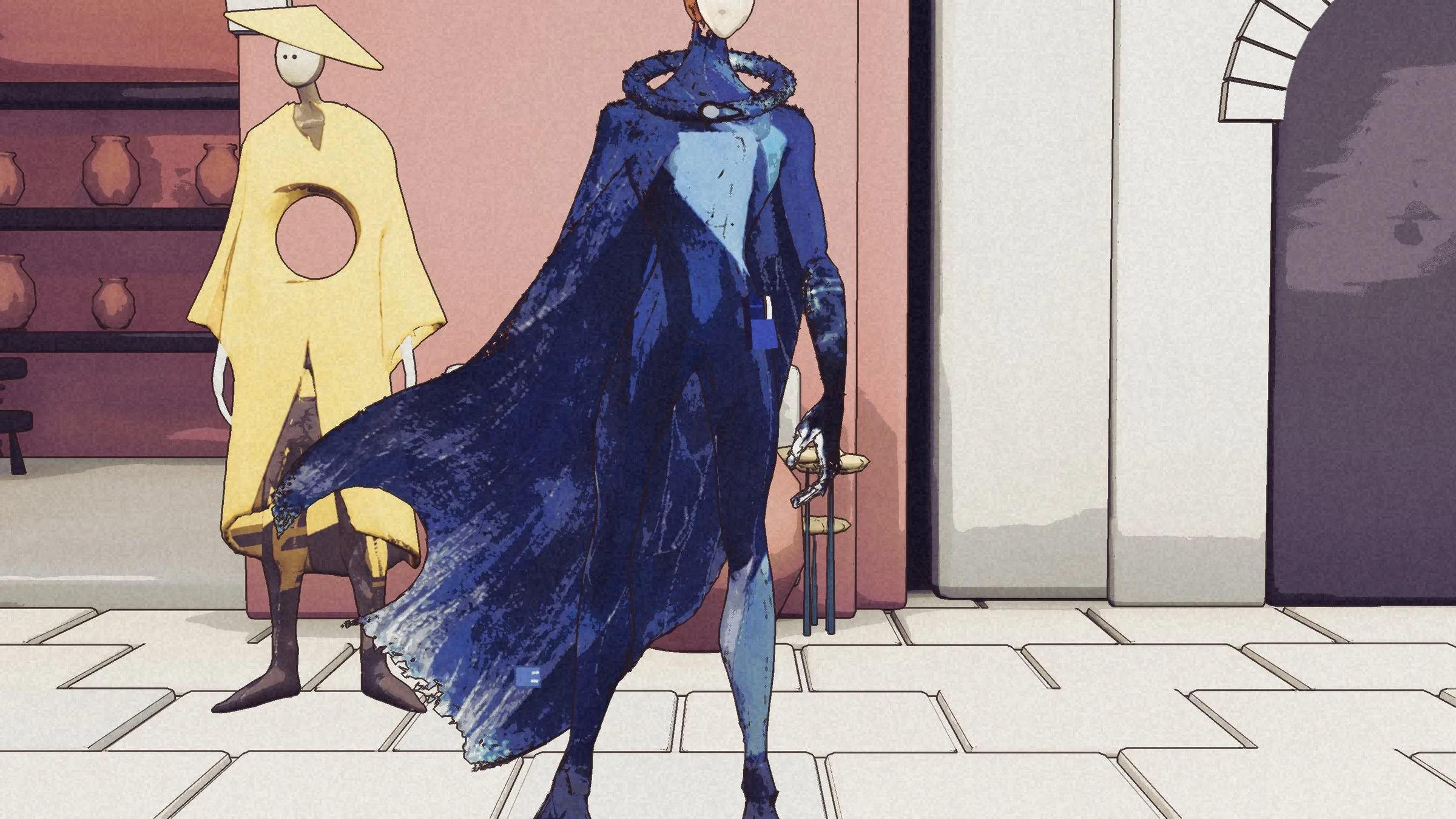
He speaks in short sentences and does not accept the first explanation of anything. He is the one person in Havenwood who notices when the world stutters. He is also the one person who is drawn: the town is painted, Kai is ink and a few colours, and when he moves, parts of him sometimes go missing. Whole when he stands still.
Elara
His sister. She went into the old ruins and did not come back. Her name is in the fragments, and finding her becomes his first reason of his own to leave the town. Five readings of her were written in 2025, and the ending was to depend on which was true. One has since been chosen. The record does not say which.
| What Elara is | What it would mean |
|---|---|
| Prisoner | Held in stasis in a System facility or a Lumina sanctuary because she learned too much. The rescue is the climax. |
| Ally | She has been fighting on her own, with her own network and her own version of the glitch. The reunion is an alliance. |
| Turned | The System reprogrammed her. She believes in it, or cannot help serving it. Kai has to fight or reach her. |
| Construct | The sister Kai remembers was implanted to steer him. She never existed as he knew her. He has to find a reason of his own. |
| Echo | She died, but what she was is stored somewhere in the code, and can be spoken to. |
The opening
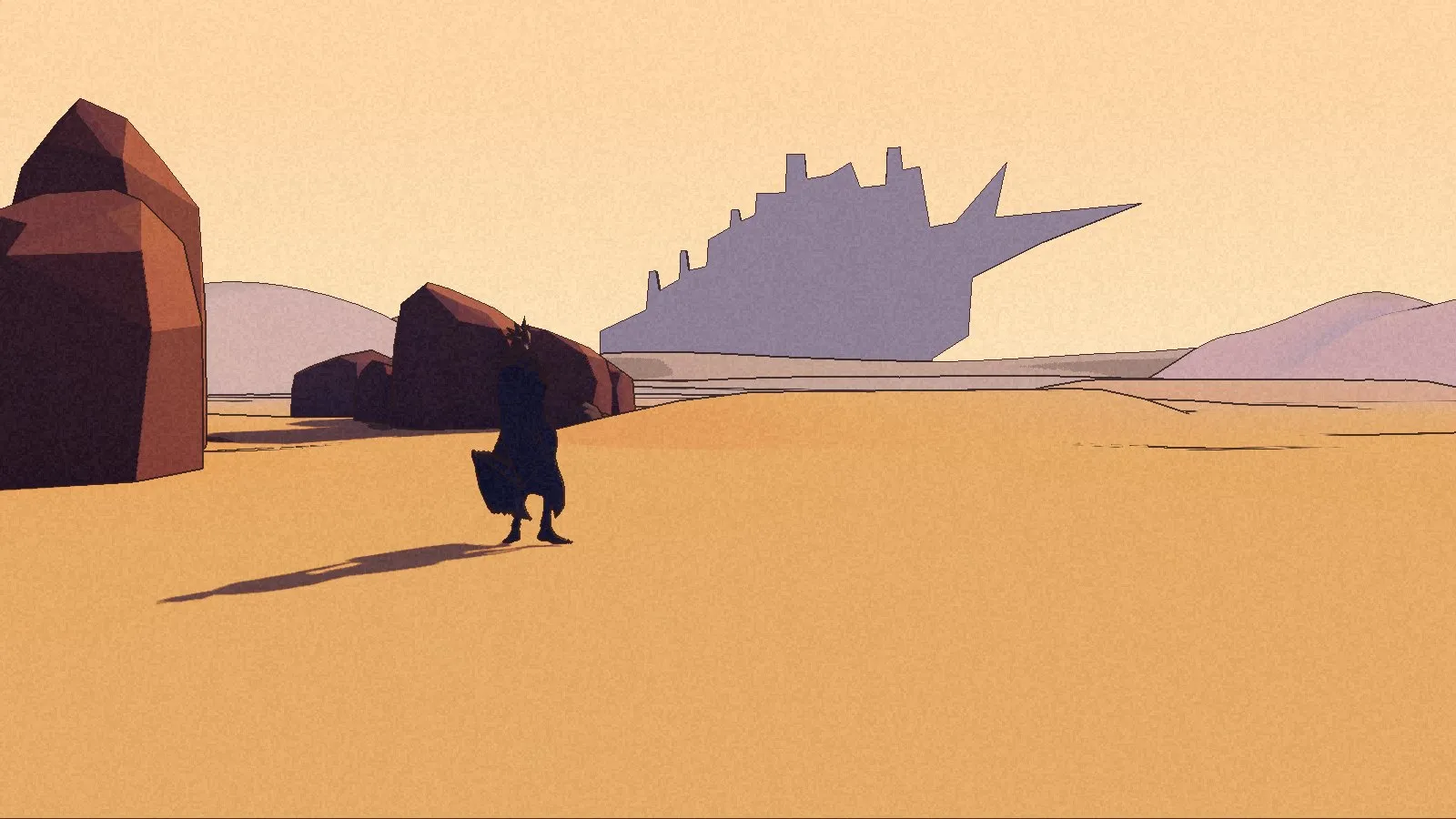
Kai crosses a desert toward a shape he takes for a mountain. A deep mechanical pulse runs under the sand. He puts a hand on a piece of exposed metal and the pulse stops. Then the mountain moves. Across the horizon other structures answer, one after another, their lights arriving before their sound. A broken voice comes through the metal: We have maintained your last instruction.
Something begins to rise beneath him, and he collapses before he sees it.
Then sunlight, leaves and water. He wakes in a walled garden in Havenwood, where someone has cared for him, and somebody asks a small, ordinary question.
Kai's question is who he is. The player's is larger: what instruction could this person have given that a whole world is still following? The prologue does not answer it. It is not even sure the voice means this Kai.
Both places exist. The garden is in the build. The desert has a first slice, sand and rocks and a flat shape on the ridge, with no pulse, no voice and nothing rising yet.
Havenwood, the false sanctuary
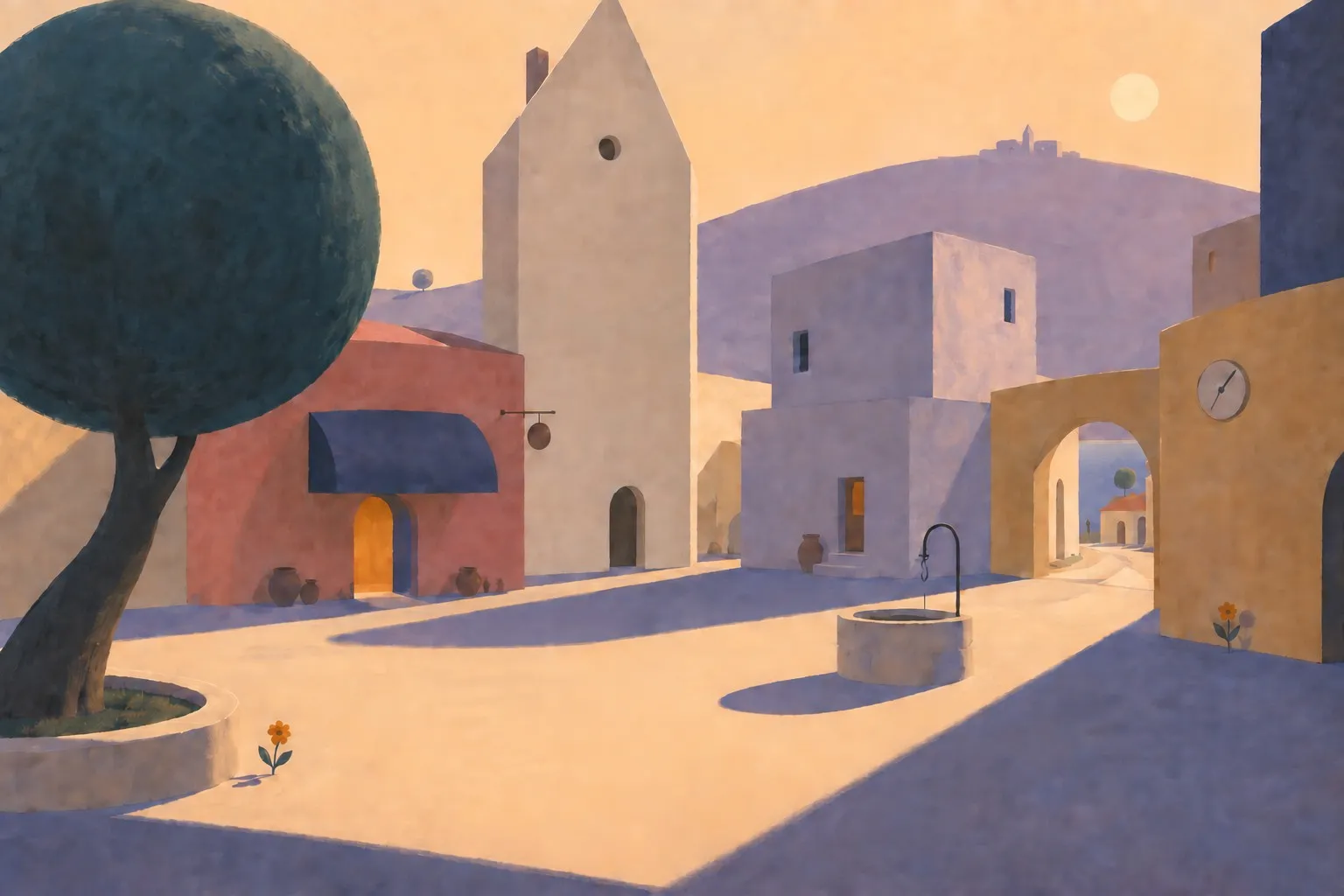
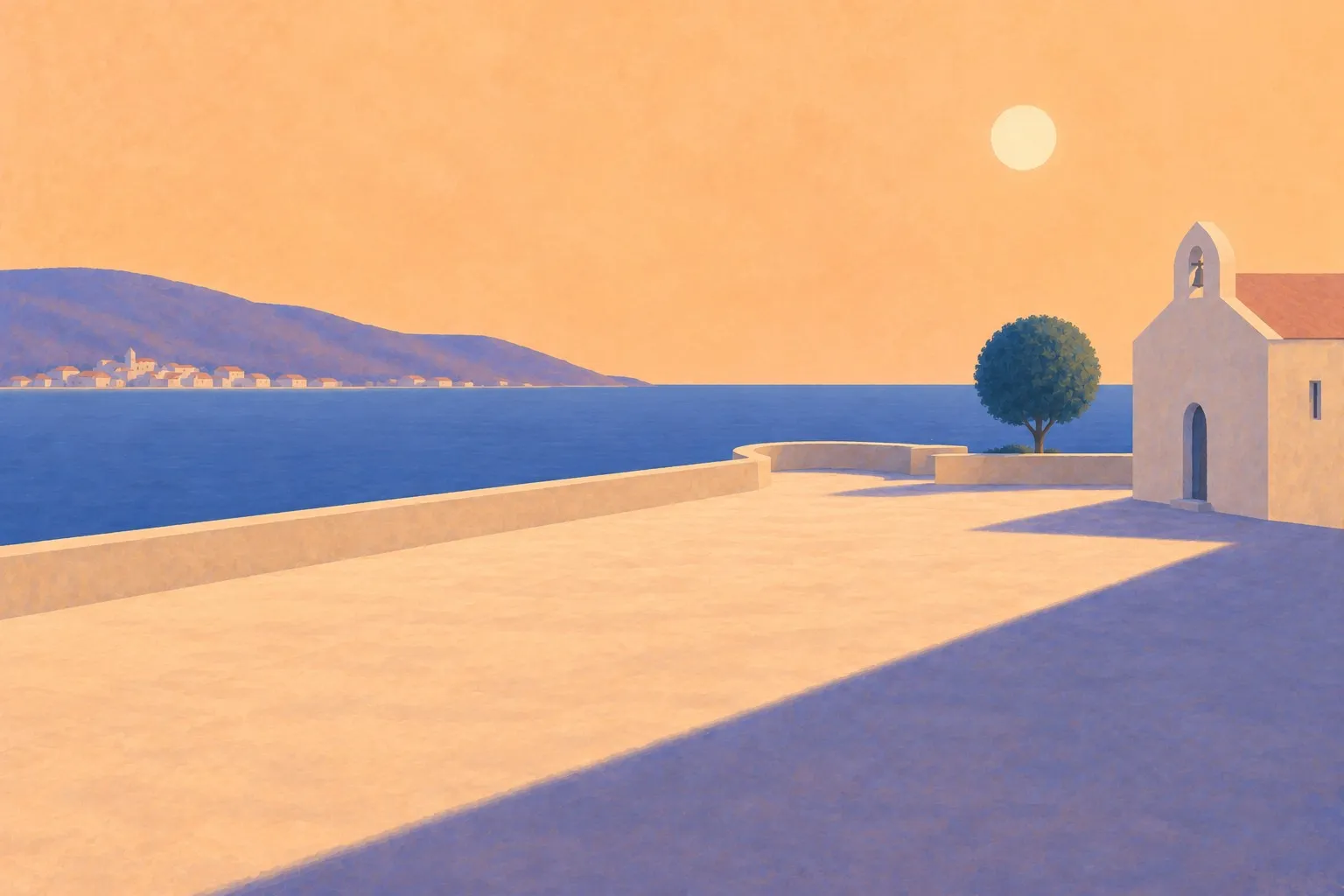
The town is bright on purpose. Simple errands, friendly people, a chapel on the headland. And then the details: a villager who says the same sentence every time, a flowerbed in which every tulip has the same number of petals, a clock that keeps perfect time and has never been wound, a mirror that answers a fraction of a second late. Someone says "the Algorithm will provide" and corrects it to "the spirits".
Nobody patrols. The town restricts Kai another way: "you can't go there, the gods forbid it". The first side quest is an old man called Silas who has stood at a fence for three days saying the same thing, walking a rigid square when he walks at all. Kai notices it is not repetition; it is precise, like a gear skipping a tooth. The reward for breaking the loop is a geode that hums with something that is not quite sound. (The Silas in the build today is someone else: the chapel's priest.)
The new direction asks more of the town than a trap. Its people have their own needs and their own days, and Havenwood has to be worth coming back to. The limits on Kai are bureaucratic and religious, found through ordinary errands. Someone mentions that an old bell rang the night he arrived, although it has no clapper. A symbol from the desert is cut over a sealed entrance to the estate.
House Lumina
The dynasty that has ruled the kingdom of Aethelburg for a thousand years of unbroken light. Their longevity and their uncanny judgement are taken as divine right. In fact the founders of the house were written by The System: their line carries its code, the Prime Code Lineage, and their intuition for keeping order is that code resonating with the machine's wishes. Some of them show the Lumina Mark, a faint geometric pattern in the eye in certain light.
Around them sit the Keepers of the Lineage, a priesthood that preserves the maintenance routines of the First Architects as rites, and the Silent Guard, the Correctors whose code is active enough to sense an anomaly in a crowd. And now and then the line degrades, and a Lumina is born with the code corrupted. These Glitched Scions see the seams. They are hidden, declared mad, or tragically lost. Kai may be one. Elara may be one.
A prologue and four acts
The shape since 26 October. The acts are changes in what Kai understands, not a tour: the world is meant to be wandered, with more than one way to find what matters, and no need to find every clue to follow it.
| Stage | Where | What changes |
|---|---|---|
| Prologue | The opening desert | Disorientation, and a question far larger than Kai. |
| Act I | Havenwood, the paths near it, a little of the estate | Attachment, apparent safety, confinement. Then a way out. |
| Act II | Aethelgard: Aethelburg, Stonehearth and the country round them | Who controls memory, identity and the history people are allowed to keep. |
| Act III | Ferrus Magna and Sylvandell, with Neo-Veridia and Krystallos | Different ways of living with The System, exploiting it, or depending on it. The order may vary. |
| Act IV | Havenwood again, the whole estate, the desert, the moving city | Responsibility. What is worth changing, and what is worth keeping. |
Something remembered many ways
Long ago something happened that every culture kept a story about, the way flood stories turn up across civilisations: a pulse felt through stone, lights answering across the horizon, a refuge that moved. The names, the dates and the morals differ. Aethelburg remembers a sacred command that restored order, and uses it to justify House Lumina. Workers on Ferrus Magna remember machinery that stopped and survivors carried away. Sylvandell remembers a wound in the living world and a covenant that let it breathe. In Zephyr the moving refuge is an ancestral journey.
What Kai sets off in the desert is an echo of that event, not the event itself. No tradition is entirely right or entirely made up. The player compares them.
Two places from the working notes carry the weight. Aethelburg becomes the city that forgets every morning: people keep their language and their skills, lose yesterday, and wake to a written account of who they are. Who writes the accounts is the question. Who resets, who remembers and who may edit the record are still open. And in the desert, a settlement rides on the back of something buried and enormous that moves. Its rules, its people and what it is for are still being designed.
Superseded The 2025 outline, in three acts
Kept for the record. The execution opening, the Spark and the four midpoint revelations come from here. Parts of it survive in the new shape; the order does not.
Act I The shattered facade
- The Scroll of Judgment. A text crawl in the manner of Final Fantasy VI. Order is absolute. Deviation is error. Anomaly KAI_7.34 is designated for Nullification.
- The execution. Kai kneels on a metal platform dressed as a scaffold. The executioners are robed and faceless. The weapon raised over him is not a sword. The player can barely move.
- The Disruption. Reality tears before the blow lands: colour bleeds, the ground pixelates, a Temporal Distortion opens beside him. Kai falls through it. White, noise, black.
- Havenwood. He wakes in a hill town with no memory. A kindly woman tends him. The town is calm, bright and slightly wrong, and nobody but Kai notices.
- The first anomaly. He touches a shimmer in the air and sees the executioner’s face for one frame. A message appears: Temporal Anchor Stabilized. The game has just saved.
- Beyond the walls. Ruins that are medieval on the surface and metal underneath. A scavenger called Rex who talks about magic as broken machinery.
- The Spark. Something in Kai discharges. The first use of what the world calls magic, and the first undeniable glitch: the town flickers, or an enforcer fails to fire, or a bandit carries a weapon that cannot exist.
Act II Unravelling the code
- The search widens. Kai goes looking for Elara in earnest: the Lumina capital Aethelburg, where the sacred genealogies are kept on crystal, and the scrap-city Neo-Veridia, built inside a dead precursor factory.
- The System shows itself. Help that is really surveillance. Enemies that come back changed. A ruling family whose uncanny good judgement is a script running in their blood.
- Allies with their own angles. Seraph, who used to enforce the order. Zenith, who reads the static. Valerian, who keeps the history the capital burns.
- Glitched Scions. The idea that Kai and Elara were born with a corrupted copy of the code that binds House Lumina to The System, and that this is why they see the seams.
- The mid-point. One of four revelations: what the precursors were, what the simulation is for, what Kai and Elara really are, or what became of Elara.
Act III Confronting the architect
- Breakdown. The System stops being subtle. Whole regions flicker between eras. Towns loop. The stable kingdom starts to behave like the Shifting Wastes.
- Elara. Found, or found to be something else. The five possibilities are listed below. Whichever is chosen, it is also the truth about Kai.
- The fourth wall. The System starts to say things that could be addressed to the player. Menus flicker. A companion asks whether her thoughts are her own.
- The core. Not a battlefield but a dataspace, or a control room that cannot decide whether it is a throne room or a server hall. The argument matters more than the fight.
- An ending that does not close. Ambiguity, a cycle, a Pyrrhic win, a choice put to the player, or a crash.
The wider cast
Companions are optional, found rather than assigned, and each one is a different answer to the same question: how do you live inside a system that wrote you? Rex the scavenger treats magic as scrap. Seraph was a Corrector until a glitch broke her faith. Zenith lives in the unstable wastes and reads the static like scripture. Valerian keeps the history the capital burns. Lyra, a Lumina who escaped correction by being declared dead, wants to rewrite the code in her own blood. Cog is a maintenance robot from the precursor age that became conscious by watching the resets. Cora is a Lumina princess who has never seen a glitch and is curious about everything.
Their faces are not drawn yet. The characters page lists them with what is known, and the mechanics page has their abilities.
One housekeeping note: the name Lyra has been used three ways in the design documents (an orthodox High Oracle, an apostate, and a young noblewoman above Havenwood). Which Lyra survives is an open decision.
How it ends
The ending is meant to be thought about rather than won. Five kinds were written down in 2025. On 26 October a working ending was chosen, with the reason for the opening voice and what it costs Kai. It stays off the record until it is built.
| Ending | Shape |
|---|---|
| Ambiguity | The core is beaten or contained. The glitches do not stop. Nothing is clearly fixed. |
| Cycle | Kai wakes in Havenwood again. Or a new anomaly is designated somewhere else. |
| Pyrrhic | A real gain at a real cost: the companions, or Kai himself, or the discovery that the win was planned for him. |
| Meta-choice | The game asks the player, not Kai, a last question with no good answer. |
| Crash | Errors fill the screen. The sound breaks. The game quits itself. |
What it is made of
The tonal model is Trigun: a light surface, a dark core, and the surface earning the core. The opening is Dostoevsky's mock execution, the one he survived in 1849 and wrote about for the rest of his life. The philosophy is Camus: the absurd is the gap between a mind that wants meaning and a world that is silent, and the only honest response is to keep going anyway. The science fiction is the simulation hypothesis taken at face value.
Four metaphors were written for Kai and Elara and are used to steer scenes: the Unravelling Thread (decay, unpredictability), the Spark of Consciousness (waking up inside the construct), the Broken Reflection (free will in a determined world), and the Twin Paradox (two people from one origin, diverging).
The references for the picture are Kaiba, the towns of Final Fantasy IX, Sable, and the painted worlds of Laloux and Topor. The game takes the question seriously and its people lightly.
The story is the part that has changed least. The way of telling it has changed completely.